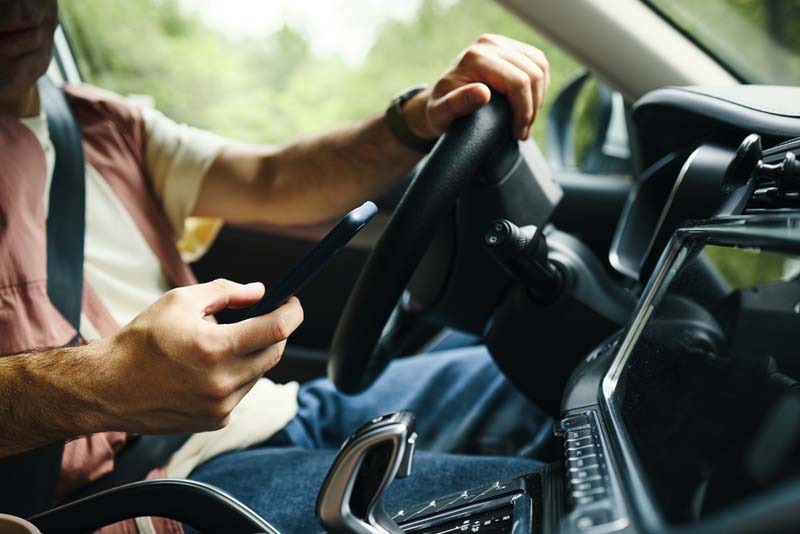
Distracted driving laws increasingly restrict how drivers can use phones and other electronic devices behind the wheel. The details are controlled largely by state law, so a legal action in one state may be prohibited differently in another. Texting, handheld calling, social media use, video viewing, and device handling can all create legal problems depending on the jurisdiction.
Who Makes Distracted Driving Laws?
States establish most rules governing driver phone use. NHTSA specifically notes that state legislatures and governors determine distracted-driving laws, including restrictions involving texting and phone conversations. NHTSA distracted-driving guidance
NHTSA’s current campaign states that texting while driving is illegal in 49 states as well as Washington, D.C., and several U.S. territories, although the exact scope and exceptions still vary.
What Types of Phone Use May Be Restricted?
Some states prohibit drivers from holding or manually operating a phone. Others focus on texting, messaging, or specific categories of drivers, such as younger motorists.
People comparing traffic-rule background should pay close attention to statutory definitions. A law may cover more than traditional text messages and may address activities such as scrolling, entering information, or viewing certain content.
Hands-free use is not automatically unrestricted everywhere. Special rules can apply in school zones, work zones, commercial vehicles, or to drivers with learner permits.
How Are Distracted Driving Violations Penalized?
A violation can lead to a fine, court costs, license points, or other consequences allowed under state law. Repeat offenses may carry higher penalties, while a distraction connected to a crash can create additional legal issues.
General driving-law explanations may help readers identify common concepts, but the citation itself should be compared with the current state code.
| Conduct | Possible Rule | Key Variable |
|---|---|---|
| Texting | Often prohibited | State law |
| Handheld calls | Restricted in many places | Driver/location |
| Device handling | May fall under hands-free rules | Statutory wording |
| Crash while distracted | Additional exposure possible | Facts of crash |
A Ticket Is Not the Only Possible Consequence
Distracted driving can matter beyond the original traffic stop. If device use contributes to a collision, investigators, insurers, and courts may examine the driver’s conduct as part of the broader incident.
That makes accurate records important. Broader driver responsibility context can be useful for understanding why a traffic violation and a civil claim may involve different questions, but the legal effect always depends on local law and evidence.
Where Drivers Commonly Misread the Rules
A frequent mistake is assuming that stopping at a red light automatically makes unrestricted phone use lawful. Some statutes regulate device use while a person is operating a vehicle and may define that activity more broadly than drivers expect.
Another mistake is treating a mounted phone as automatically legal. Mounting may solve the handheld issue in some places, but manually entering information or watching content may still violate another provision.
When Should You Get Legal Help?
Legal advice may be useful when a distracted-driving citation follows a serious crash, involves injury, threatens a commercial driver’s license, or carries unusually serious charges. An attorney can also help interpret whether the conduct alleged actually falls within the wording of the applicable statute. Preserve the citation, crash documents, photographs, and relevant phone records rather than altering or deleting potential evidence.
Frequently Asked Questions
Is using a phone at a red light legal?
It depends on the state and the wording of its law. Some restrictions can apply even while a vehicle is temporarily stopped in traffic.
Can hands-free calling still violate distracted driving laws?
Possibly. State rules differ, and separate restrictions may apply to certain drivers, locations, or activities even when a device is not being held.
Does a distracted-driving ticket add license points?
Some jurisdictions assess points while others use different penalty systems. Check the citation and the current rules of the motor vehicle agency that issued your license.
Treat the Local Rule as the Controlling Rule
Phone technology changes faster than many drivers’ habits, and guessing about what a statute permits can lead to an avoidable citation. Before driving in an unfamiliar state, check its current distracted-driving restrictions and put the device away whenever possible. If a citation or crash has already occurred, respond according to the deadlines printed on the official documents.
This article is for general informational purposes and is not a substitute for legal advice from a qualified attorney in your jurisdiction.